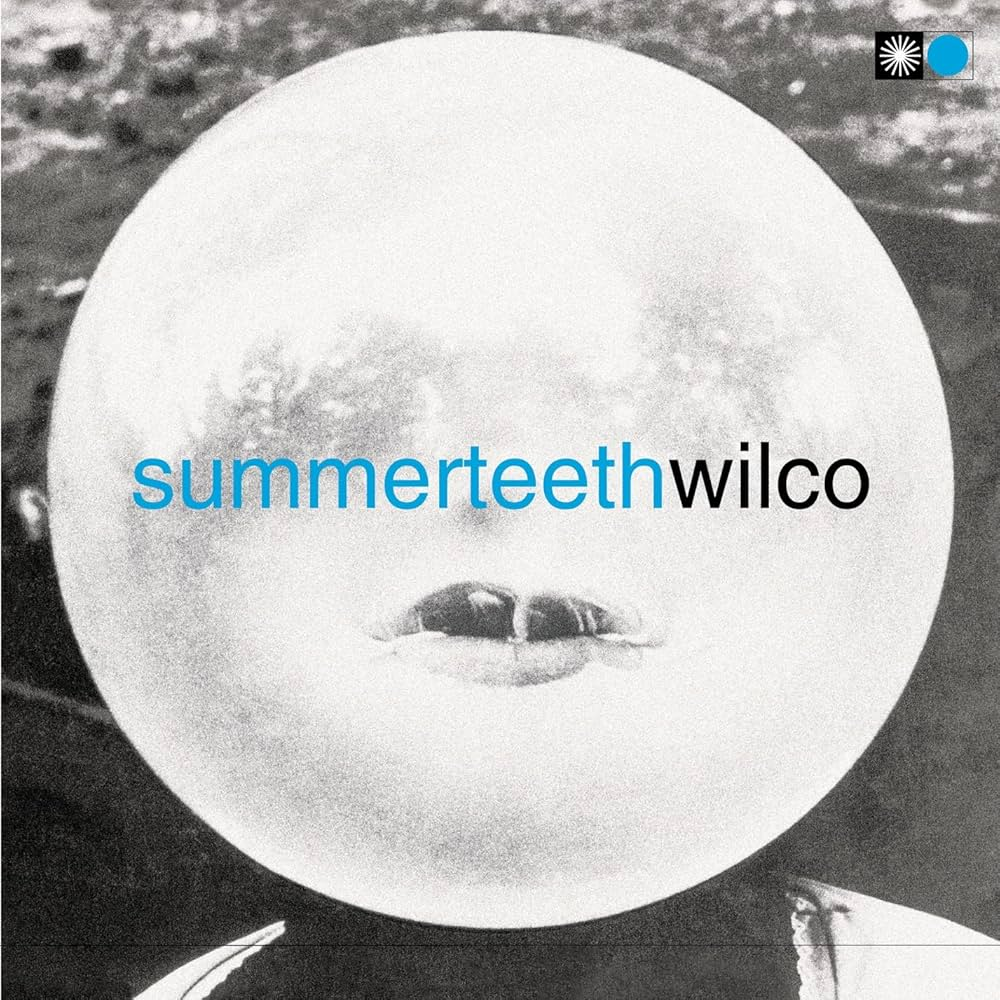
1999
A Shot in the Arm
Wilco
So. Where was I?
In early 1999, I had started my first job in the real world, making 27k a year as a claims adjuster for Allstate. This was actually a pay cut. Just waiting tables part time at the Hard Rock Cafe, I had been making more than my new grown-up salary. I was out of school. My dad wasn’t paying my rent anymore. My rock band had broken up. And I now had to wear business casual clothes sitting in my cubicle in The Woodlands.
My brother was in the same boat, having graduated (also from University of Houston) and started his own job as an engineer. We decided to move in together. Looking back, living with my brother, just the two of us, was the best part of a mostly miserable three year stint working that first job and living in the suburbs again.
From my brother, I learned how to build my own computer. How to mod a PlayStation to play pirated games. How to download from Napster. As kids, my brother and I had been into computers and gaming, but being in college I had been a luddite. All I cared about was music. Now that I was living with him again, I found myself studying HTML and geeking out on hardware. I was teaching myself Cubase and Acid. I bought my first digital camera. I was becoming a tech dork, and it was something that would stay with me the rest of my life.
I was also becoming an alcoholic. And that would stay with me, too. Waiting tables and going to school and playing in bands—drinking every night felt normal. I was with people. And it was okay to drink when you were with people. But living in the suburbs and working a day job, I was still drinking every night. At home in my room. Playing Gran Turismo on my playstation with my stereo loud. Wondering what the hell I was doing with my life.
I was good at my job at least. I’ve always been good at my job. I know how to grind. How to be interested in boring things like insurance rules, compliance training, HIPAA, and arcane healthcare billing regulations. I also knew how to talk to people at work and how to get promoted. How to work late and be on “management track.” But I wasn’t writing songs. And I felt dead inside.
My body was breaking down too. Staring at an old IBM mainframe for 8 or 9 hours day wrecked my eyesight and left me with carpal tunnel syndrome. I had to get glasses and a wrist brace. Our bodies are not made to sit around and look at a screen all day. But that would be my work life from now on. I would figure things out eventually, but in 1999 I was just starting a three-year downswing that would be the worst time in my life.
In March of ’99, I was only a few months into my brief career as a claims adjuster, and I was going to Chicago for a week and a half of training at Allstate Headquarters. While I was there, the new album from Chicago-based band Wilco would be coming out, and I badly needed it to be good. Wilco’s Jeff Tweedy had been for years a role model for me. Maybe THE role model. His voice was limited and creaky like mine, but he was still writing the songs and making the albums I wanted to make.
So I was excited, but also concerned. Because Wilco had made two albums of original material since Tweedy’s prior band, Uncle Tupelo had broken up, and neither really measured up to the craft and depth of the songs Tweedy wrote with Uncle Tupelo. In hindsight that sounds crazy, because Tweedy now has the kind of deep songbook—both from Wilco and his solo work—that rivals his heroes Dylan, Neil Young, Bruce Springsteen and Paul Westerberg. When we saw his solo show last year he banged out classic for two hours, and still didn’t get to a dozen songs I’d wanted to hear.
But back in 1999, he’d only made two proper Wilco albums. Their debut album AM had some good songs and two great ones (“Passenger Side” and “Dash 7”). It was fun, but it wasn’t the equal of any Uncle Tupelo albums. This was all the more apparent because Tweedy’s former Uncle Tupelo partner, Jay Farrar had released Trace, which was and is an unimpeachable classic (Farrar peaked early—that’s still the best record he’s ever made by himself).
Wilco’s second record, Being There, was a double album. So it was certainly bigger. Plus they had added genius multi-instrumentalist Jay Bennett, and the production and hooks on the record had leveled up accordingly. But many of the songs felt undercooked, with lyrics that seemed half-finished and uninspired compared with Uncle Tupelo classics like “New Madrid,” “Gun,” and “Screen Door.” It was another good-not-great effort.
Then in 1998, Wilco had collaborated with Billy Bragg and Natalie Merchant, in partnership with Woody Guthrie’s estate to bring a trove of Guthrie’s unused lyrics to life in a new collection of recordings called Mermaid Avenue. Tweedy’s signature contribution, “California Stars,” became the album’s single, it’s probably still the best known song from what would become a three-volume collection.
But go deeper into that first Mermaid Avenue record, and most of the best songs were written by Bragg, not Tweedy. Songs like “Walt Whitman’s Niece,” “I Guess I Planted,” and “Way Over Yonder in the Minor Key”, just seemed to more fully capture the earnest and sometimes rogue-ish charm of Guthrie’s lyrics, marrying them with the album’s most upbeat and memorable melodies. Tweedy’s songs, “California Stars” notwithstanding, swung wildly between novelty tracks like “Hoodoo Voodoo” and maudlin dirges like “One By One.”
To me it sounded like Bragg had outdone Tweedy with Tweedy’s own band. So in 1999, I was rooting for Tweedy, hoping that Summerteeth would be the great album I knew he could make.
Well, it was.
Summerteeth was the first time Tweedy was consistently writing songs as good or better than anything Uncle Tupelo had done. And it jettisoned for good the idea that Wilco would continue to be a standard bearer for Alt Country or No Depression.
There was still plenty of depressing lyrics, but they were paired with Jay Bennett’s sunny dreamscape of kaleidoscopic pop production that somehow made Tweedy’s downer lyrics hit even harder. This wasn’t supposed to be country music. It sounded like the Beach Boys, Big Star, Randy Newman, and Elvis Costello.
And the songs hit me right where I was in my life from the very first lines of the album:
The way things go
You get so low Struggle to find your skin
Yep. That was me. That’s where I was at. And this one:
How to fight loneliness
Smile all the time Shine your teeth ’til meaningless Sharpen them with lies
And this one, where Tweedy writes about getting old before your time, trading your creativity for capitalism:
When you wake up, feeling old
This piano filled with souls Some strange purse stuffed nervous with gold Can you be where you want to be
Or zombie-walking through the work day, stuffing your creativity down into your dreams where you can’t reach it.
Like a cloud his fingers explode
On the typewriter ribbon, the shadow grows His hearts in a bowl behind the bank And every evening when he gets home To make his supper and eat it alone His black shirt cries While his shoes get cold It’s just a dream he keeps having And it doesn’t seem to mean anything
I mean, I know Tweedy wasn’t writing this for me, but damn—I felt these songs in my bones. I was spending all day wearing a headset at my work computer. Talking on the phone to customers endlessly, then coming home, drinking alone, and feeling like the songs I had inside me were untouchable.
It did take me a while to find my skin. To balance having a job with having a creative life. To find the time where I could pick up my guitar and be myself again. I bought a new four-track cassette recorder. I started writing songs again. And it would take a few years, but I would eventually start a new band and move back downtown.
In the meantime, I made peace with working for a living. It’s part of growing up for nearly all of us: learning to do what we have to do, so we can make space for what we want to do. As the song says, maybe all I needed was a shot in the arm. Something in my veins, bloodier than blood.
Favorite Lyrics
The ashtray says you were up all night
When you went to bed with your darkest mind You’ve changed Oh, you’ve changed What you once were isn’t what you want to be anymore